Deborah Schwab: LANDSCAPE ARCHITECT, ANNAPOLIS, MARYLAND.
In private practice since about 1992.
HOW DID YOU BECOME INVOLVED WITH ART?
I remember as a kid, growing up in RI, wanting to be an artist. I was constantly drawing. My high school art teacher tried to convince me to attend Rhode Island School of Design, but that was not in the family budget. My other love was the outdoors and nature, so I attended The University of Rhode Island in the Natural Resources program. My Dad was a civil engineer with his own firm I worked for while in college. He had an LA doing all the project design and layout. So, that’s how I thought the world worked. There was no Landscape Architecture program at URI at that time. I put together my own program geared towards planning within the college. So, not a lot of studio design time but Rural Sociology, Environmental Law, Urban Geography, Interpretation of Aerial Photography, Cartography, etc. I learned about Ian McHarg, Jane Jacobs, how natural water systems work, in depth soils in the ag school. Through the process of related degree and a longer time of working in design firms, I was able to qualify and pass the UNE (predecessor to the LARE) in 1980 for my first license. Landscape Architecture was a way to combine my interests into one field; art, nature and the part of my head that just works like an engineer (my sisters and I call it being genetically doomed!). So, art and painting took a back seat for many years. In 2008, during the recession, colleagues and I were discussing that we wanted to get back into art so we started doing ‘art nights’ at my office; some art, time with friends, a little wine and music and we were off and going.
WE COLLABORATED ON THE ANNAPOLIS CITY DOCK. CAN YOU TALK A BIT ABOUT THAT PROJECT?
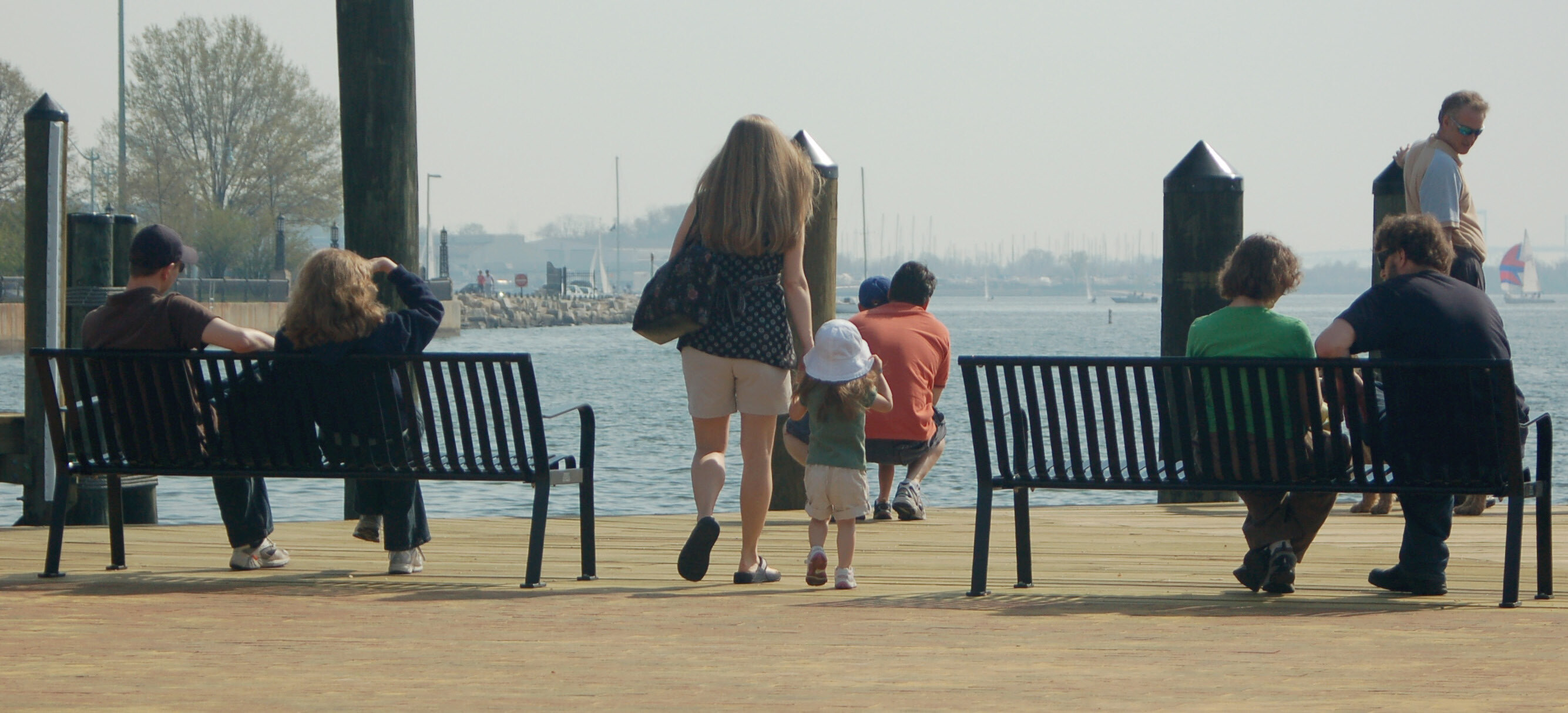
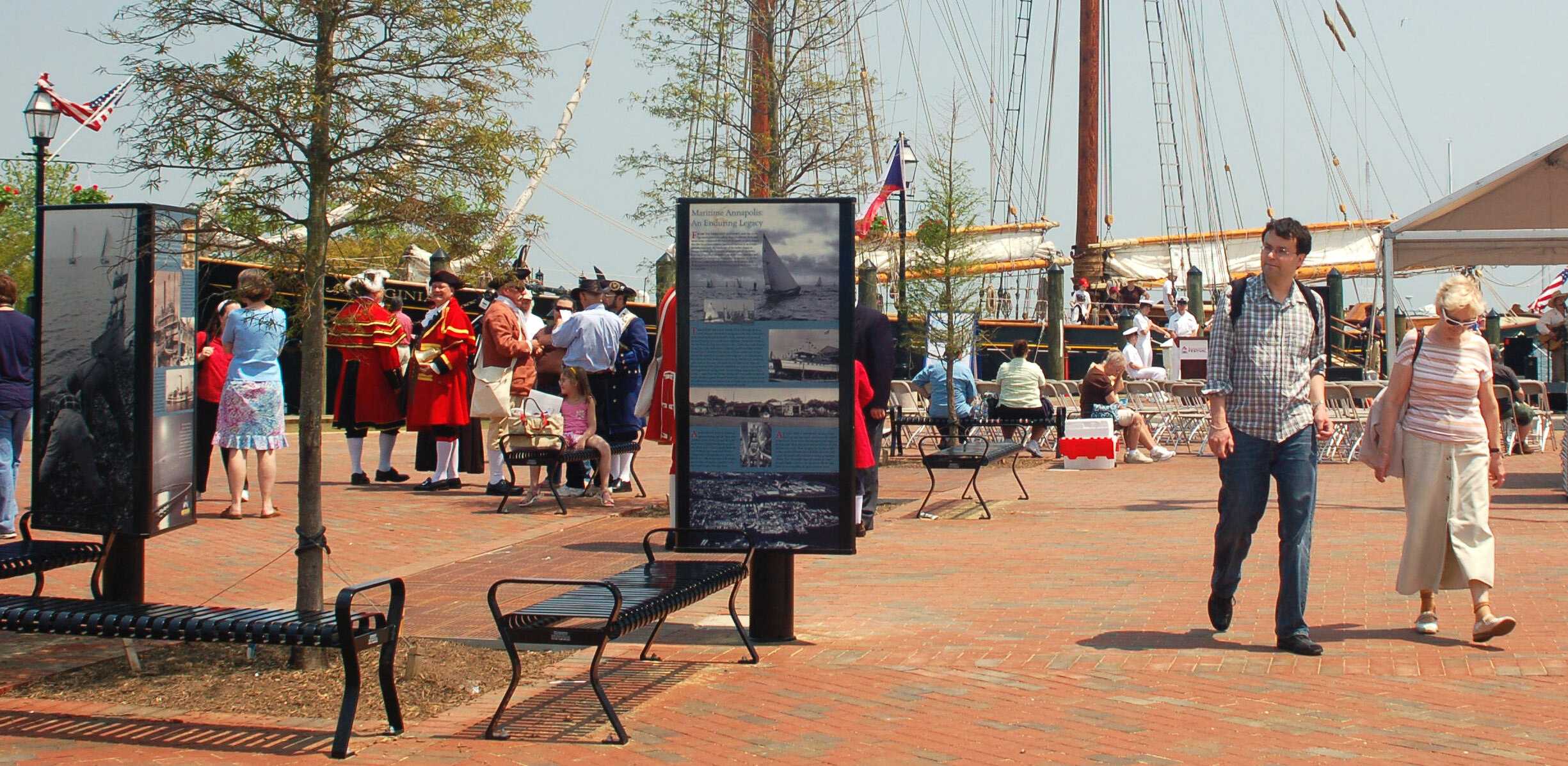
The Annapolis ‘City Dock’ is the public core of the small city and is its only public interface with the harbor. As you can imagine it is very busy with a wide array of activities; tour boats, one of the largest in-water boat shows on the east coast, as well as music events and other cultural events. Several years ago, the city had made plans to rebuild the bulkhead surrounding it on three sides. The plans involved completely ripping up the existing plaza to install large rebar, side to side across the plaza area - connecting the bulkhead on both sides together. The soil is basically soup - old layers of fill in what was once part of the harbor. The tide rises and falls underneath the surface. The city had neglected to put a piece in the contract for rebuilding the plaza. The RFP was a fast track design for replacement with no new elements due to funding requirements. There were allowances to reconfigure the space, so I tried to make sure each element made more than one contribution to the space – such as the flagpole base having the electrical connections for band sound systems. I made sure I was going to be the low bid. I had a strong connection with the area due to my boat career years.
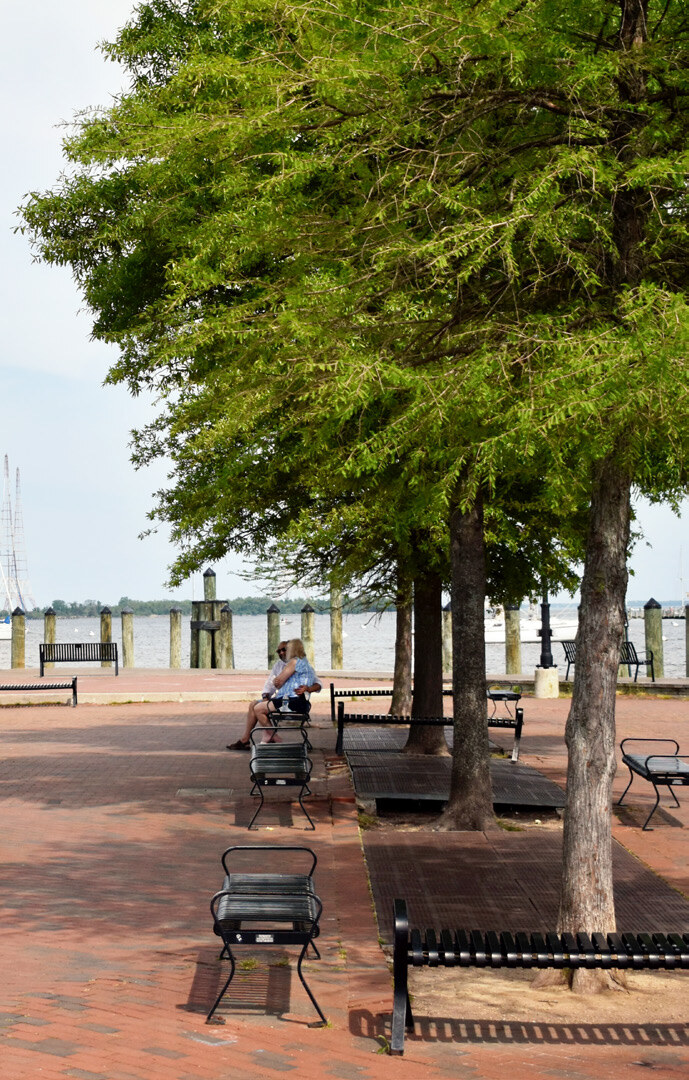
Victor Stanley was a strong partner in recreating the space. I designed a central axis to refocus the view out over the harbor towards the Chesapeake Bay by using a small allée of trees. To protect the trees from boat show and visitor abuse, I arranged the benches under the trees to be a bit of a protective barrier and provide seating under the trees. The benches needed to be removed for several weeks every year for the boat shows. They needed to be anchored in such a way that there would be no mounting bolts sticking up through the surface. Victor Stanley helped with a mounting detail that would work in that situation.
WHAT DO YOU LOOK FOR WHEN ADDING ELEMENTS SUCH AS SITE AMENITIES TO A PROJECT?
I am looking for a design that is complementary to the site and use. For instance in Annapolis, a designated Historic Preservation City, there is already a certain public street furnishing look established, but a few years ago when working on a small park project across the street from a college with an active arts department, Victor Stanley was helpful in the selection of furnishings that would fit both the contemporary street look and the clients budget.
Sometimes I have to convince a client that spending part of their carefully controlled budget on high quality site furnishings pays off in the long run. Durability and quality are very important to me.
In the area that I work, Maryland, working with Victor Stanley is also the sustainable choice. The manufacture is here in Maryland so there is no long haul shipping involved. The representatives are able to quickly answer questions. In the deadline driven world we exist in, this can be a very important feature. These are points I make sure to make to my clients.
WHAT ADVICE DO YOU HAVE FOR THOSE SEEKING TO BLEND THEIR PASSIONS INTO THIS WORK?
Either landscape architecture is your complete passion - in which case, do the research. Find the firms or projects that you really want to make your life’s work and go for that goal. Or, make a choice to work in this profession in a way that allows space to combine other passions. I have been involved with ASLA chapter positions for many years. That gave me opportunities to add a wider range of knowledge and people into my life other than I would just working in my firm. Other volunteer opportunities have given me a chance to explore public art and spaces in a small neighborhood scale. I’ve spent a lot of time through plant and horticulture organizations learning more about an early passion, plants, with the plant ‘nerds’. For me, it’s been about finding the balance - not always successfully, but as I’m in the later years of my career, feeling for the most part, it’s worked.
YOU RECENTLY SHOWCASED YOUR PAINTINGS AT A LOCAL GALLERY. WHAT WAS THAT EXPERIENCE LIKE? HOW DID YOU JUGGLE IT WITH YOUR WORKLOAD?
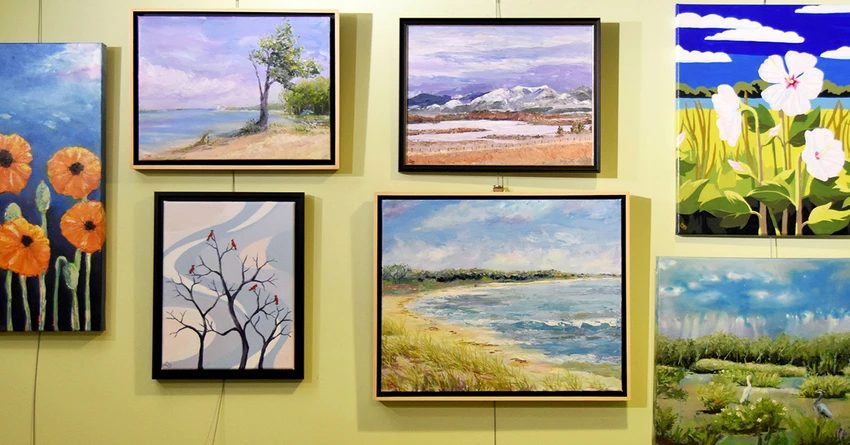
I’ve been in traditional galleries or had shows where I prepared my work, helped to hang it and promote it - a more traditional way of exhibiting. That route is easier on the schedule -once it’s set up the time involved was minimal. The Gallery 57 West in Annapolis experience has been very different. It is a collective gallery, with the work of 20-25 artists of all genres. Participation involves scheduled work shifts, events and meeting times. I have loved the energy of getting to work with and spend time with the other artists and also meeting folks who come in and are interested in art. People come to Annapolis from all over. The only way it fits into my schedule is that I have my own practice and am now in my 60s. I have reduced my workload by being more selective in the projects that I take on and concentrate on the work that doesn’t require as much psychic energy, leaving more of that for the other parts of my life- like my painting.
WHAT INSPIRES YOUR PAINTINGS?
So far, my work has been mostly figurative painting with a leaning to depicting the natural world. There was a time where I took a 10 year break from landscape architecture. I lived, worked on and captained boats up and down the US East coast, Caribbean and Bahamas. That lifestyle and living where the light and color are a constant means I can’t quite escape the need to try to capture incredible skies and water. I also paint landscapes local and from travels, plants and other topics both in a traditional style and one that is more graphic. Who knows where it will go from here?
ANY BITS OF WISDOM TO PASS ALONG TO THE EMERGING PROFESSIONALS IN LANDSCAPE ARCHITECTURE?
I think the ability to have some flexibility towards where your career may take you. Some people have very definite and passionate goals and work furiously to attaining those. I can admire that trait. Many of us though, are not quite as career goal driven. That can bring its own opportunities to explore paths that you hadn’t thought of when you started out. Make space for what your life can become. It’s not all just about work.